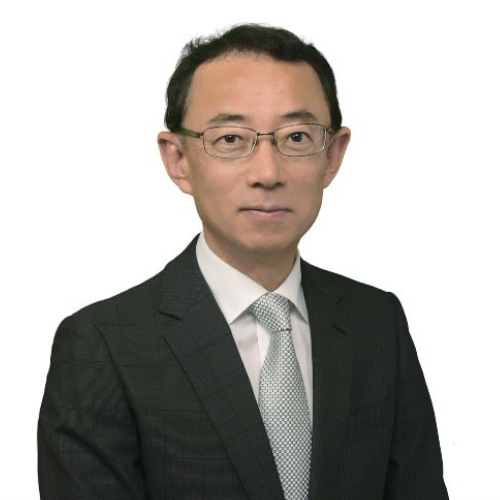
Keiichiro Segawa

Keiichiro Segawa

Chief Executive Staff Officer, Hydrogen Strategy Division, Kawasaki Heavy Industries, Ltd.

Keiichiro Segawa has engaged in the strategy formulation as Chief Executive Staff Officer at Hydrogen Strategy Division of Kawasaki Heavy Industries, Ltd. (KHI) since 2022.

His over 30 years’ LNG project development experience at a major Japanese trading house has been well utilized for the benefit of KHI’s liquefied hydrogen (LH2) supply chain realization.

KHI leads Japan Suiso Energy, Ltd. (JSE), established to promote commercial-scaled LH2 supply chains to Japan and other countries, and he acts as director of its board.

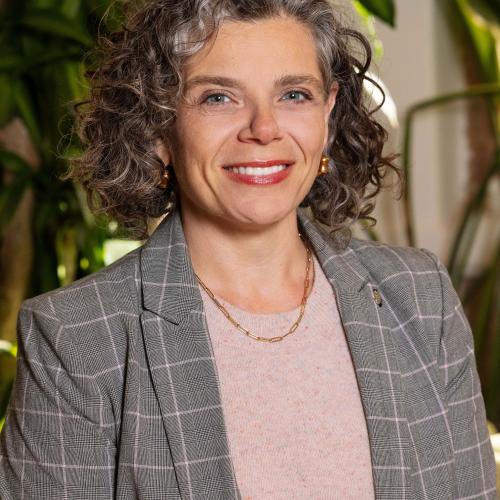
Headshot of zeina el-azzi

Zeina El-Azzi

CEO, Gage Zero

Zeina El-Azzi is a renewable energy innovator and leader with nearly 25 years of experience deploying billions of dollars in capital to build infrastructure projects for technologies that are at the precipice of commercialization at scale. She focuses on the strategy and execution of environmental, government, and social initiatives. As the CEO of Gage Zero, she drives the strategic and financial direction for the company’s mission to develop, own, and operate reliable electric truck charging infrastructure that accelerates zero emission fleets and benefits communities.

Tiffany Wu headshot

Tiffany Wu

Senior Project Manager, Texas Energy Poverty Research Institute (TEPRI)

Tiffany Wu is dedicated to deploying distributed energy resources (DERs) in low-income communities to improve energy affordability and resiliency. She leads efforts in piloting virtual power plants (VPPs) for multifamily housing and community resiliency hubs. In her previous role, she was a Department of Energy Solar Energy Innovation Fellow and an advisor to Commissioner Will McAdams on DER policies at the Public Utility Commission of Texas. She helped create and manage the Aggregate Distributed Energy Resources (ADER) Task Force and pilot program and participated in policy discussions and actions related to DER operations, resiliency, and reliability in Texas. She spent 10 years developing and deploying carbon capture projects for Mitsubishi Heavy Industries as a process engineer, commissioning engineer, and a business development manager. She holds a B.S. in Chemical Engineering, a Master of Public Affairs, and an M.S. in Energy and Earth Resources from The University of Texas at Austin. For her master’s research, she quantified diversity of generation resources for each state in the U.S. and interviewed experts on resiliency issues considered during ERCOT’s market restructure.

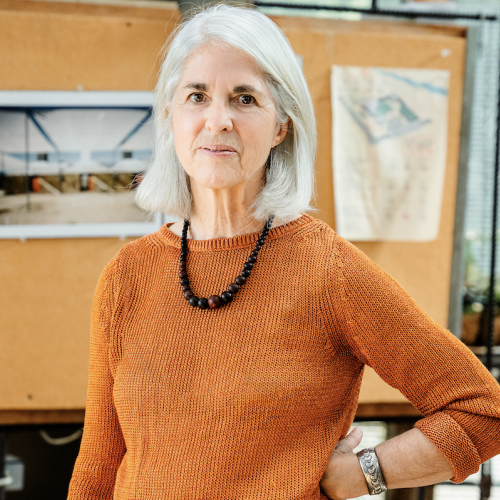
Pliny Fisk Headshot

Pliny Fisk

Co-Founder and Co-Director, Center for Maximum Potential Building Systems

With a background in architecture, landscape architecture, and systems sciences, Pliny Fisk has made pivotal contributions to developing policies, protocols, and prototypes. His prototypes challenge conventional wisdom about building system design, engineering, and materials. He has received awards including the UN Earth Summit Award, the U.S. Green Building Council’s Sacred Tree Award, and the American Solar Energy Society's Passive Solar Pioneer Award. He has advised the MacArthur, Gates, and Enterprise Foundations and served on the GSA’s National Registry for Design Excellence peer review program. Pliny is an Emeritus Professor at Texas A&M University. His biography, Pliny Fisk III: Creating a Maximum Potential Future, was published by Ecotone Publishing.

Gail Vittori

Gail Vittori

LEED Fellow, Co-Director, Center for Maximum Potential Building Systems

Gail Vittori works at the intersection of sustainable design and human health. Since 1993, Vittori has coordinated the center’s Sustainable Design Program, spanning private and public sector projects nationally and internationally, and has been a catalyst for several national initiatives to green the health care sector and advance fundamental human health considerations in green building. She served on the U.S. Green Building Council and Green Business Certification Inc. board of directors, including as chair of both; is a Founding Member and Vice-Chair of the Health Product Declaration Collaborative Board; is on the Advisory Board of the UT Energy Institute; and is a Loeb Fellow at Harvard University’s Graduate School of Design. In 2015, she received the Hanley Award for Vision and Leadership in Sustainability.

Sophia Cunningham headshot

Sophia Cunningham

Vice President, Houston Energy Transition Initiative (HETI)

Sophia Cunningham is vice president of the Houston Energy Transition Initiative (HETI) at the Greater Houston Partnership, the region’s largest chamber of commerce. HETI promotes economic growth in the Greater Houston region by convening energy industry members in support of technology, policy, and market initiatives to accelerate an energy-abundant, low-carbon future. At HETI, Sophia is responsible for efforts related to carbon capture, use and storage (CCUS), community engagement, climate equity, and stakeholder activation through the Initiative’s Advisory Board.

Prior to joining HETI, Sophia was director of public policy at the Partnership. The Partnership’s public policy team advances Houston’s position as a great global city through policy that fosters economic growth and opportunity for all. The Partnership’s impact work begins in the policy advisory committees, where business community members and policy leaders meet. Sophia was responsible for the Partnership’s energy, sustainability, transportation and infrastructure policy portfolio.

Prior to joining the public policy team, Sophia worked for the Partnership’s regional workforce development initiative, UpSkill Houston. During her time at UpSkill Houston, Sophia supported the development of employer-led programs that cultivate quality talent in the industries that drive Houston’s regional economy. Sophia graduated from Davidson College with a Bachelor of Arts in English. She is an alum of the Center for Houston’s Future Leadership Forum.
Subscribe to