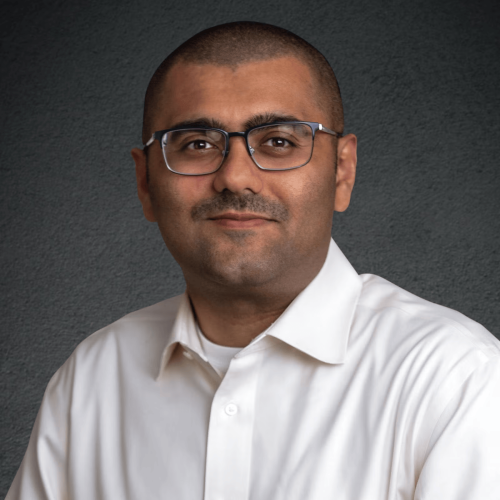
Aashutosh Mistry is an experimental theorist. Since Aug ‘23, he has been an assistant professor in the Department of Mechanical Engineering and a faculty fellow of the Payne Institute for Public Policy at the Colorado School of Mines. His work is about developing next-generation energy technologies (e.g., batteries), cultivating the workforce supporting these futuristic technologies (through research, teaching, mentoring and service), and engaging the public for science advocacy. The development of next-generation energy technologies is intrinsically sluggish, given an incomplete understanding of how materials-scale behavior translates to the device-scale performance. Aashutosh’ group synergistically combines controlled experiments, physics-based theory, and machine learning to elucidate the mechanisms describing the predictable materials-to-devices connection. Some of the mechanisms they have uncovered are extended mixed conduction in intercalation hosts, physics of unexpected bulk motion of neutral species in polarized electrolytes, the relative importance of various molecular motions in defining electrolyte transport, deleterious effects of non-energy-storing phases in battery electrodes, and viscous effects opposing dewetting of pendant liquid drops.